
You Cannot Give What You Have Not Received
By Stephanie Strick ·
I remember making the meals.
Trying to get as much nutrition into them as I possibly could. Watching what he ate without wanting him to know how closely I was watching.
And I remember knowing, in that way a mother sometimes knows, that he was going back into his room afterward to exercise.
I couldn’t stop it.
I don’t mean that I couldn’t find him. I mean I didn’t know what I would do even if I did.
So sometimes I froze.
I made the meals. I listened for footsteps I didn’t want to hear. I wondered if I should say something, push harder, back off, check on him again.
And underneath all of it was the fear that I might somehow miss the thing I was supposed to do to make him better.
At night, I worried.
During the day, I functioned.
And eventually, I couldn’t even really pray anymore.
I’d put on a rosary from an app or listen to someone else’s voice because I needed to borrow hope from somewhere. There wasn’t much left in my own heart during that season.
If you’re living through something like this with your child, you may know this kind of exhaustion.
It isn’t simply being tired.
It’s what happens when so much of you has become focused on watching, helping, anticipating, researching, fixing, praying, and trying to hold everything together that you barely notice what is happening inside of you.
For a long time, I didn’t notice either.
When the crisis touches something older
I thought all of my fear was about my son.
And certainly, much of it was. He was sick. There were things that needed to be taken seriously. There were meals to make, appointments to attend and decisions that had to be made.
But over time, I began to recognize something else.
The crisis wasn’t only creating fear in me.
It was also touching places in me that had been there long before my son’s eating disorder.
Growing up, emotions weren’t something we talked about very much in my family. If I was upset, the focus wasn’t usually on what I was feeling or what I might need. I learned instead to pay attention to everyone else.
Don’t disappoint anyone. Don’t make things harder. Be nice. Keep going.
I don’t believe anyone intended to teach me that my feelings didn’t matter. But somehow, that was the message I absorbed.
And eventually, being “good” became deeply connected to putting other people’s needs before my own.
I even confused some of this with Christian love.
I thought loving well meant asking very little for myself. Being agreeable. Sacrificing. Keeping the peace.
It took me years to understand that Christian love isn’t the erasure of the person doing the loving.
Christ gave Himself completely, but He was never afraid of truth. He rested. He withdrew. He grieved. He allowed Himself to be cared for. He loved sacrificially without pretending that human needs didn’t exist.
I had spent much of my life trying to love other people without really knowing how to receive care myself.
And then my son became sick.
Suddenly, every instinct in me to protect, fix, please, anticipate, and hold everything together was on high alert.
I couldn’t see that then.
I can now.
The book that gave me language for something I had always felt
Years later, during my formation with CatholicPsych, I read the work of Catholic psychiatrist Conrad Baars.
His writing about affirmation and being received affected me deeply.
I cried through some of Born Only Once.
Baars wrote about something profoundly human: our need not simply to be loved in theory, but to experience ourselves as received — to know, through another person, that who we are is good and worthy of love.
Not because we performed well. Not because we were useful. Not because we kept everyone happy.
Simply because we are.
As I read, something began to make sense.
I had spent so much of my life trying to become the person other people needed me to be that I wasn’t always sure how to simply be myself.
I struggled to be assertive. I barely knew what to do with anger.
I was much more comfortable caring for someone else than recognizing that I might have needs of my own.
And I began to understand something that has stayed with me ever since:
It is very difficult to offer another person something we have never learned to receive ourselves.
That isn’t an indictment of our parents.
And it isn’t an indictment of us.
Most families hand down both tremendous love and places that still need healing. Often we simply don’t know what we haven’t received until life brings us to a place where we need it.
For me, my son’s illness became one of those places.
This is not about blaming parents
I want to be especially careful here.
Eating disorders are complex illnesses. They are not caused by a mother who worried too much, loved imperfectly, struggled with boundaries, or didn’t know how to regulate every emotion in her home.
I did not cause my son’s eating disorder.
And if your child is struggling, I don’t want you reading this searching through your past for evidence that you caused theirs. That isn’t the invitation.
The invitation is much gentler … and, I think, much more hopeful.
I began to see that I came into my son’s struggle with an interior world of my own.
My fears came with me. My history came with me. My difficulty tolerating uncertainty came with me. My desire to fix what hurt came with me. My tendency to measure myself by how well everyone around me was doing came with me.
None of that caused his illness.
But it affected how I experienced it and, at times, how I responded to him.
And that meant there was something I could do.
Not another thing to do to or for him.
Something I could begin allowing God to do in me.
When your child’s struggle becomes your whole world
This is one of the hardest things about loving someone through an eating disorder.
Your attention naturally turns toward your child.
Is she eating? Is he exercising? Is her weight changing? Is treatment working?
Should I say something? Did I say too much? Am I pushing too hard? Am I not pushing hard enough?
You can spend hours researching, driving to appointments, planning meals, talking with clinicians, worrying about siblings, trying to protect your marriage, and lying awake thinking about a future you suddenly can’t picture anymore.
And almost every conversation is about your child.
Very few people ask what all of this is doing inside of you.
So you keep going. Because you’re the mom and your child needs you. Because there isn’t time to fall apart.
I understand that.
But I also know now that tending to what was happening inside of me wasn’t taking something away from my son.
It was part of learning how to love him more freely.
My healing wasn’t separate from his
This may be the thing I most wish I had understood earlier.
I didn’t need to become a perfectly regulated mother. Or heal every wound from my childhood. I didn’t need to stop being afraid.
I needed somewhere I could begin bringing what was actually happening inside of me.
The fear. The need to control. The helplessness. The anger I didn’t think I was allowed to feel. The desperate desire to get everything right. The part of me that believed that if my child wasn’t okay, somehow I wasn’t okay either.
As those places in me began to be received with compassion rather than pushed away, something slowly changed.
I could become more curious and less reactive. I could notice fear without always letting fear make the next decision. I could begin separating my child’s struggle from my worth as his mother. I could love him without believing that love gave me the power, or the responsibility, to control his entire path.
That kind of change didn’t happen all at once.
It still doesn’t.
But I have come to believe deeply that our own healing is not separate from the way we accompany the people we love.
What I wish I had known then
I wish someone had told me that I mattered in that room, too.
Not instead of my son. Not because his medical or nutritional needs were less important. But because I was a human being walking through something frightening and painful, and what was happening inside of me deserved somewhere to go.
I wish I had understood sooner that receiving care for myself wasn’t selfish. That learning my own patterns wasn’t an exercise in blaming my parents or blaming myself. That tending to my fear wouldn’t make me less attentive to my child.
It could actually help me become a steadier presence for him.
There is tremendous hope in that.
We are not trapped by the ways we learned to survive, love, protect, or keep the peace. We can learn something different. We can receive now what perhaps we didn’t fully receive then.
And slowly, what we receive begins to become something we can offer.
More freedom. More steadiness. More room for another person’s emotions. More capacity to stay present when we can’t fix what is happening. More trust that our child’s story belongs ultimately to God, not to us.
I don’t trust my own ability to manage my children’s paths anymore.
I trust something better. I trust that God is at work in their lives and in mine.
We are not the sum of our weaknesses and failures. We are the sum of the Father’s love for us and our real capacity to become the image of His Son.
— Saint John Paul II
That’s a much harder sentence to believe than it is to read.
But I think it is the ground underneath so much of this work.
For our children. And for us.
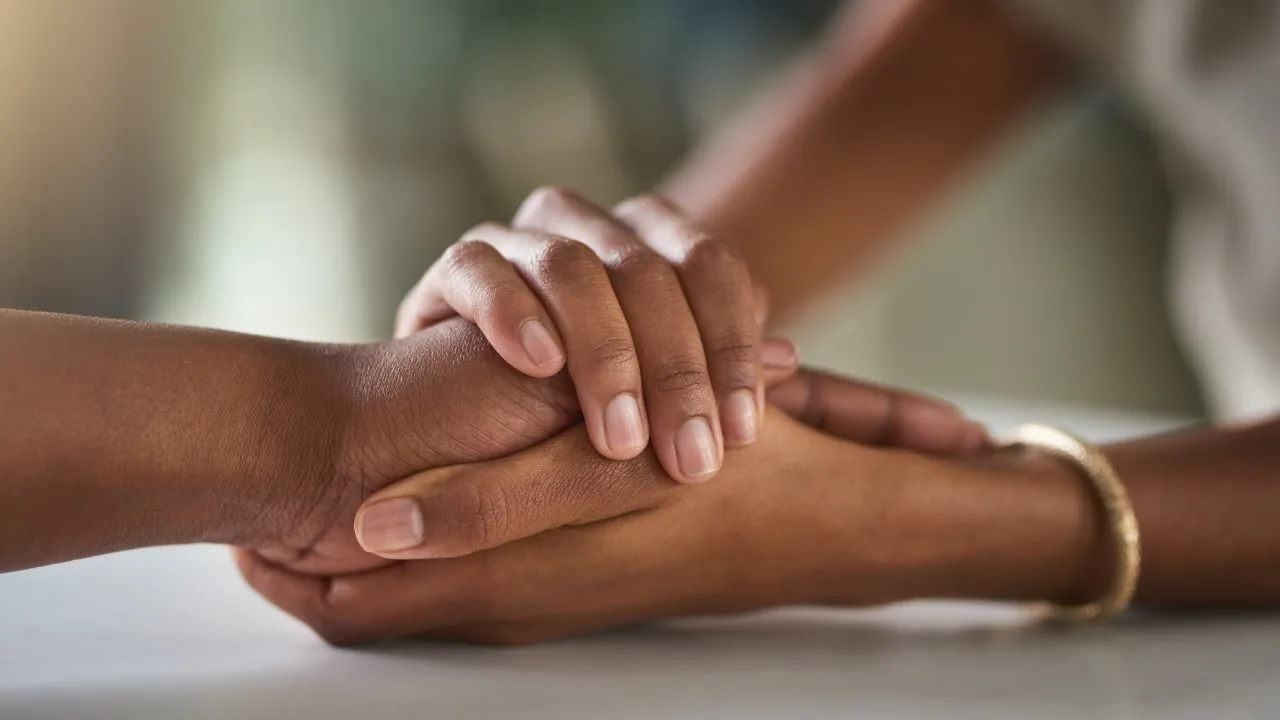
Maybe you need somewhere to be received, too
If you are doing everything you know to do for your child right now — making the meals, going to the appointments, watching, wondering, researching, praying — and quietly realizing that you are not okay either, I want you to know that noticing that isn’t a failure.
Maybe this season is touching places in you that are older than this season. Maybe fear has become mixed up with love. Maybe you are carrying responsibility that was never entirely yours to carry.
Maybe you’ve become so focused on what your child needs that you aren’t even sure what is happening inside of you anymore.
You don’t need another person telling you to try harder.
You may need somewhere you can bring all of this and be received, too.
Because the goal isn’t to fix yourself so you can fix your child.
It’s to become freer and steadier inside yourself so you can be present to the child you love — without losing yourself in their struggle.
That is something I wish I had understood much earlier.
And it is a large part of why I do this work now.
If you’re beginning to realize that your child’s struggle has become a place where you need support, too, I’d be glad to talk with you about what daily mentorship could look like. It’s a place to bring the fear, the questions, the patterns you’re beginning to notice, and the ordinary moments that happen between appointments, in the middle of real life.
Learn more about mentorship or reach out to talk with me →
And if you’re not ready for that conversation, Finding Steadiness is a free guide I created for parents navigating a child’s eating disorder. It’s a simple place to begin, helping you notice what’s happening inside of you and find a little more steadiness as you walk alongside your child.
Questions Parents Are Asking
Did I cause my child's eating disorder?
No. Eating disorders are complex illnesses. They are not caused by a mother who worried too much, loved imperfectly, struggled with boundaries, or didn't know how to regulate every emotion in her home. I did not cause my son's eating disorder — and if your child is struggling, I don't want you reading this while searching through your past for evidence that you caused theirs. That isn't the invitation. What I did come to see is quieter than that. I walked into my son's struggle carrying an interior world of my own. My fears came with me. My history came with me. My difficulty tolerating uncertainty came with me. None of that caused his illness, but it did shape how I experienced it and, at times, how I responded to him. That distinction matters, because it means there is something you can do that isn't one more thing to do to or for your child. It's something you can begin allowing God to do in you.
Why is my child's eating disorder bringing up things from my own childhood?
Because a crisis like this rarely stays in one place. There are usually layers. For a long time I thought all of my fear was about my son, and much of it genuinely was. But over time I began to recognize that the crisis wasn't only creating fear in me — it was also touching places that had been there long before his eating disorder. Growing up, emotions weren't something we talked about very much in my family, and I learned instead to pay attention to everyone else. Don't disappoint anyone. Don't make things harder. Be nice. Keep going. I don't believe anyone intended to teach me that my feelings didn't matter, but somehow that was the message I absorbed. So when my son became sick, every instinct in me to protect, fix, please and hold everything together was already on high alert. I couldn't see that then. I can now. If something similar is surfacing in you, it is not a sign of weakness — most families hand down both tremendous love and places that still need healing.
Is it selfish to get support for myself when my child is the one who is sick?
It can feel that way, especially when almost every conversation is about your child and very few people ask what all of this is doing inside of you. Here's what tends to happen: you keep going, because you're the mom and your child needs you, and because there isn't time to fall apart. I understand that. But I wish I had understood sooner that receiving care for myself wasn't selfish, and that tending to my own fear wouldn't make me less attentive to my son. It could actually help me become a steadier presence for him. Attending to what was happening inside me wasn't taking something away from him — it was part of learning how to love him more freely. Because the goal isn't to fix yourself so you can fix your child. It's to become freer and steadier inside yourself so you can be present to the child you love, without losing yourself in their struggle.
What does it mean to be received, and why does it matter for a parent?
It means being known and welcomed as you are, rather than for what you manage to hold together. I came across the idea while reading the Catholic psychiatrist Conrad Baars during my formation, and it named something I had felt for years without having language for it. Baars wrote about something profoundly human: our need not simply to be loved in theory, but to experience ourselves as received — to know, through another person, that who we are is good and worthy of love. Not because we performed well. Not because we were useful. Not because we kept everyone happy. Simply because we are. Reading that, something began to make sense for me. I had spent much of my life trying to love other people without really knowing how to receive care myself. It is very difficult to offer another person something we have never learned to receive ourselves — and that is not an indictment of our parents, or of us. It is simply an invitation to receive now what we perhaps didn't fully receive then.
You Don't Have to Do This Alone
Schedule a Free CallNo commitment. Just a conversation about where you are.